Wednesday, 9 November 2011

Death Bend

Although I've got used to most of the idiosyncrasies of Polish driving, what can really scare me is the practice of going round blind bends on the wrong side of the road. I figure that, if I'm sitting in the passenger seat with the best view of what's lies round the corner, but can't see what's coming in the opposite direction, we haven't a chance. However, the ability to miss the car heading straight at us seems to be a demonstration of driving skill. I tend to close my eyes or look out of the side window.

I now drive some 11 km from Młochów to Łazy on the school run. From Falenty to Walendów, there's a clear, straight stretch of downward sloping road with no hidden outlets, which allows you to get up a good turn of speed: 80/90 kph - the speed limit - in my case, but faster for others. This photo looks in the other direction up the hill.

From 2011 11

However, down the bottom, there's a blind bend. It's one of those bends that is just sharper and longer than you expect, but it is signposted. Even so, I misjudged it when I first went round, having to use the brakes rather than relying on changing down gear and using the engine vacuum to slow the car down, part of my current attempt at economy driving. (I suspect there's a slight optical illusion making it seem further to the bend than it actually is.)


There is the inevitable possibility, just as you get to the bend, that another vehicle will suddenly appear from the opposite direction, cutting the corner short, according to standard driving practice, on your side of the road.


Seen from the other side.


It's also standard to take a corner wide and just going a bit too fast, again standard practice, will send you well out across the road, not that the driver below has done so. Even so, comparing the pictures, you can see how tight the space is.


Still, having got used to driving the route, I thought that it might be just me being overcautious. However, after about five weeks, a car and van had collided. Since then there has been another crash, with a section of the railings by the side of the road being demolished, whilst the ground on the side of the road shows this, just near the curve.


These a bit further down.


And this, the latest, crash site. Almost all the ground marks are on the outside edge of the corner, but seem to be made by vehicles coming from both directions. This is well down from the bend and must have been the result of someone coming down the hill and around the turn at extreme speed.


Fortunately, there's a crossroads just at the bottom of the hill - the car has stopped there in the picture below - where the priority is against the crash route. Even fast drivers should not be doing more than 70 or 80 kph going up to the corner. My recommendation would be 50kph maximum. (Signs each side showing a 40 maximum limit might be helpful, but I really doubt if many drivers would take any notice of it.)


So, with the safety features in today's cars and the limited space for acceleration in one of the directions, maybe I'm still unreasonably scared. The closest I have been to having an accident was to see the rear of a car that appeared round the corner ahead of me sliding across my path, but the driver recovered well before I got there. There are no flowers or crosses beside the road, so maybe no one has died.

Even so, having turned the corner, narrowly avoiding the oncoming car or just side-swiping it, just around that bend there may be, as I have seen them, a mother with pushchair and baby, school boys larking around or someone peddling along calmly on their bicycle.


Death lies there waiting.

There are times when I feel quite happy about dangerous drivers committing suicide in their cars, but this is the sort of place where murder is just as likely. Perhaps it's just because I'm now doing a longer journey at school time, but I've been surprised recently at just how many of the very fast drivers I now see are young women (mothers?) with their children in the back seats of the car. I know that Polish women are often very tough and strong minded, but I thought they care enough about their children to think of the danger. Stupid of me, I guess.

Sunday, 6 November 2011

Wonder Cars

It's strange how even people like me, who think a car is just a means of transport, can still have affection for national cars. As I never had enough money to afford a decent car in England, I have little nostalgia for the cars I had or even that friends had.

There was one near thing, though. My mate John was a motor mechanic who I helped when he was repairing cars for neighbours at the weekends - I wanted to learn how to look after my own. Many of the parts were bought from local scrap yards, who he therefore got to know. He took me one day to show me an Austin 3 Litre, a bigger, luxury version of his own 1800.


This was as near to Rolls Royce class that I could ever aspire to: they even thought it had a Rolls Royce engine. It was in good condition overall, but "needed some minor mechanical work", which I think was intended as an honest appraisal. However, the parts were difficult to get as the car was so rare, although John was eager to get to work on it. The scrapyard man just didn't want to break the car up, so it was very cheap - only slightly above what I would otherwise have thought of paying to replace my stolen Austin 1100 (in which we had just put a factory rebuilt 1300 engine, adding an improved Japanese carburettor - the thieves must have thought it was their lucky day when they opened the bonnet). However, I knew I wouldn't be able to afford the maintenance, insurance and petrol, not to mention the impossibility of finding a parking space big enough outside my house.

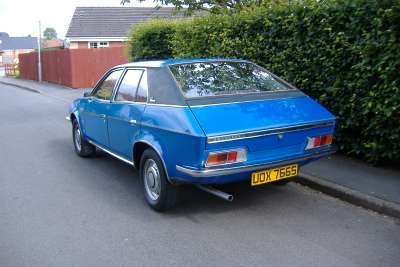
Another car I really liked the look of around that time was the then new Austin Princess. It seemed at the time to have a radically new wedge shaped look, although the pictures I have looked at don't give me the same impression now.


Except this one, that is.


Some time later, working in Poland, I drove my father-in-law's Maluch - Polski Fiat, which was a fun car to drive. I don't have any pictures of it, but it was something like this, rust and all:


Warsaw roads were much clearer in those days and drivers tended to leave the right hand lane clear. My English driving habit of staying in the slow lane let me drive past everyone, especially, but not only, at traffic lights. The Maluch's acceleration was appalling, although my change-down-gear and stoke-up-the-revs got it going, with the valves hammering the camshaft into, I suspect, shreds (assuming that's how the engine worked). I was likened to a taxi driver, intended as a compliment. Who needed a new, two halves welded together Mercedes? I have tracked Maluchs doing 120 kph on fairly flat roads, which isn't bad either, given the 90 speed limit. (The Yaris still had better acceleration and another 40 or more kph, so 'Bye Bye, little one'.)

Although I never drove a Polonez, I was impressed by the wide diversity of body works, from the standard saloon and estate, to pick-up, small and large vans, including a refrigerated version. There was quite some excitement when the Rover engine was fitted, so we went to see one in the showroom. I was asked incredulously whether I wanted one, to which the politic answer was that of course I didn't, although a more honest answer would have been that I would love to have tried it. Although they largely seem to be relegated to poor people's cars these days - you can tell poorer areas by the numbers in the car parks, they still provide the backbone to many small businesses. (The only car picture of my own on this post.)


Its days were clearly numbered, but I did think that there was one niche market that it could have been adapted to. Its heavy use as a rough use, land and road vehicle for farms particularly fired my imagination - conditions very familiar on many 'roads', paved and unpaved, in Poland as well as private dirt tracks. If the Polonez could just be given a much higher chassis clearance without exorbitant cost, it had great potential to be a cheap, no thrills, but completely practical rough use private car and commercial vehicle: not just in Poland, but everywhere. (I don't know if reliability was a real problem, as was its reputation, rather than, like Austin etc, a legacy of the failure of early models even though these were subsequently rectified.)

This is Sweet Flag Street (ul Tataraków) in Walendów after a long, dry autumn. You can imagine driving conditions in the wet and snow.

From 2011 11

I was wondering for some time how I could depict my vision of the Polonez, but I came across something similar: an official prototype called the Polonez Analog. This version was produced in 1993/94, but development ended when the company was taken over by Daewoo in 1995.


I suspect the difference between my vision and that of the creators of the Analog, was that I just envisaged adapting the existing vehicle variants to have higher ground clearance, whilst they were trying to develop a new version of the car that would compete directly with other all-terrain vehicles. See this 2009 Suzuki Equator as a comparison: its how the Analog would look like with today's rounded body look.


Not that I had any idea what technical problems there would have been, but it couldn't have been that difficult. Four wheel drive and luxury equipment could all be developed later. I'm no expert on cars, but I don't know anything in the economy bracket even today, whilst I can see the market for it around me here. Oh well, I'm only dreaming.

'Around me' being a literal truth. I think this is a public road (Upper Street), but it is primarily used by tractors and farm vans, as the housing plots are empty. It had got into the state where even small tractors had difficulty going along, but they bought a huge John Deere tractor, which can easily plough it - twice this year: modern road resurfacing in action.

From 2011 10

What would the Polish public's reaction to this change to the Polonez have been, though. The following photograph is labelled "funny pictures and photos".


Isn't it brilliant? Its described as a "Polonez, Audi and Jeep in one" on the website, but one comment suggests it's basically a Polonez cabin placed on a Jeep chassis, with an Audi front. Although I wouldn't have contemplated replacing all the drive components in the initial product, this would be something like how a pick-up version could have looked.

Still dreaming, still dreaming, still dreaming: not quite the right words, but 'lay back and dream'. There's some great portrait photography and artwork in this video, even if you don't like Jimi Hendrix, but if you do, separate your speakers and turn up the volume:


I just wondered if the full version of Voodoo Chile was available.


No it isn't quite, but you can switch quickly to the last 5 minutes.


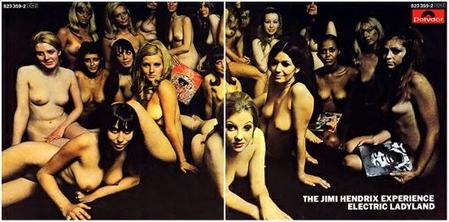
No naked ladies from the original Electric Ladyland album cover, for some reason. I remember them as being strangely unerotic: they were an odd looking bunch. Since this post was supposed to be about cars and every knows that men link cars with sex, I really should rectify the omission.


I'm now trying to remember the name and author of the book that ... Crash' - just remembered - by err ... I might have liked the book better if I'd understood what the car/sex link was. Him?Really? I think of him as a science-fiction writer.

Thursday, 3 November 2011

So Many Hotels in Poland

One of the great things in driving around Poland is the ease with which you can find a hotel for the night without having to book. There are so many to choose, either directly on the roadside or clearly signposted. The quality can range from great to barely usable, but that in itself is part of the fun of travel.

A roadside hotel coffee stop, too early to stop the night.

From 2011 08

I was therefore surprised to see a headline about a shortage of hotel beds in Poland, but it turned out to be an English language difference. Poland actually seems to be doing quite well if you consider 'hotels' to be a general term for accommodation. However, I decided to check my understanding of English.

Oxford Wordpower neatly sums up 'hotel' as "a place to stay when you are on holiday or travelling". This isn't always true for a Bed and Breakfast, but the dictionary clarifies this as "a private house which provides a room for the night" and "a place to stay in a private house or small hotel that consists of ...". The ambiguity here reflects my own first impression of a B&B in the first sense, but my recognition that the small hotel version is true as well. Other places, eg pubs also do bed and breakfast. Poland has 'B&B's, although their existence isn't recognised by Polish Wikipedia. From my stay in one in Mikołajki, where there are loads, I suspect that people don't know what it means. There was a kettle and fridge, but no food or anything provided by the people who ran the place. It didn't even merit a picture, but it was just a few doors up from this rather more up-market self catering 'B&B'.

[Oxford Wordpower is a useful English dictionary with Polish equivalents, rather than a straight forward E/P and P/E dictionary.]

This hotel had the Polish title 'zajazd', sometimes translated into English as 'inn'. Many zajazds are just restaurants. We stopped the night and the quality was fine, although we didn't try the breakfast in the rather basic, cafe bar.


'Motel' is also ambiguous for me, being foremost the US style "if you stay in a motel you can park your car near your room" (Oxford Wordpower again) famed for sexual encounters and criminal hideaways as the person at the counter doesn't see what's happening. It is also, however, just a "hotel near a main road for people who are travelling by car".

Another chance roadside stop, with the hotel (in Mrągowo) well placed for a dusk encounter. The unusual "West House" name reflects the town's hosting of an International Country Music festival although, chatting at the bar, it seems to have become a largely Polish and minimal Country affair. Mrongoville Western City is nearby, but we headed west in the morning, completely ignorant of it's existence. There seems to be lots of cowboy towns in Poland.


Although there were few details, part of the reason for thinking there was a shortage of hotels came from one of those tedious EU average comparisons. Surprisingly enough, Poland has fewer hotels that those seemingly sunshine guaranteed, Mediterranean holiday destinations, with their thousands and thousands of hotel rooms lined up in developed strips along the coast.

An English B&B in the country outside Salisbury. Having become accustomed to the ease of finding accommodation in Poland, we hadn't booked anywhere. The chain motels on the main road were full, so I took the smaller roads towards Salisbury, thinking there must be lots of places to stay. There was eventually a road sign for the B&B several miles away along an even more minor road. It was the only place that I saw. However, in the morning light I found we had passed quite a few: the signs were invisible in the evening. British tourists seem to be expected to be tucked up in bed before dark.

From 2011 07 England

A problem there, frequently found in Poland as well, was that the TV didn't work. Both of these two were notable for not being plagued by that normal English problem of mildew and fungus caused by the damp walls (itself caused by lack of ventilation).

I pre-booked this B&B outside Canterbury so that I could have an assured place to stay in time for the ferry. Not only was the name "Amadis" invisible in the dark, but there was no indication that it was a B&B. Nice place though, with a wide range of international licence plates on the cars.


The Amadis B&B is owned and run by Dot and Geoff Tomaszek. Goeff's father was Polish, but he has never been to Poland.


I do have some apprehension for the future of Poland's road side hotels. Far from having a shortage of beds, many rural travel-through areas will soon find that their hotels are superfluous and disappearing. Motorways and expressways may be great for speeding the traveller to the destination of choice, but who will want to detour off the route to stop for a night in some nowhere place that might or might not have somewhere to stay?

The Zajazd shown earlier is a typical 'in the middle of nowhere' hotel, depending on passing traffic on the A22. It's future? The place already needs renovation and was for sale. On the road to oblivion?

Wednesday, 2 November 2011

Chatter about the Warsaw no-wheel plane landing

"How amazing, He's landed better than many planes I've been on with their wheels down." "He flies gliders." Perhaps he can judge the distance better without wheels. I wonder what he lands like normally."

No disrespect meant and I assume his mates have already been pulling his leg about this.


"I feel sorry for the (TV) reporters. The text ticker at the bottom keeps reporting there are no injuries and the airport will be open at 8:00am tomorrow, but all they have to ask the reporter at the scene is 'Can you tell us about injuries and when will the airport re-open.' No wonder they make so much of disasters."

Short and sweet for a change, as I'm testing out the computer to see if I've cured a 'blue screen' problem.

Thursday, 27 October 2011

Plump Pumpkins and Gaudy Gourds

For urban gardeners, Polish celebration of Halloween is perfectly timed for the cusp between autumn and winter, literally celebrating the fruits of the growing year.

From 2011 10

Driving along the Piaseczno / Nadarzyn road you suddenly come across a group of some seven or eight stalls of bright orange pumpkins, shining out like the early morning sun, bringing a haze of colour to an otherwise drab landscape.


The road is aptly named Sunny (Słoneczna - the 721), with the pumpkin fields lying behind the houses at the front. Although it is quite common to come across a single or a pair of stalls around Warsaw, the collection on this road makes it exceptionally attractive, both in terms of looks and stopping to buy. The one we mainly used had the added advantage of having a small car park.


There is all the witch stuff and trick-or-treat for young kids and a restaurant night out for those who want it (and pubs, I guess, if you have one near you). However, it is the display of colour that I value most, surviving the frosts and giving a warm welcome, as night takes over from day and grey increasingly engulfs us in anticipation of the monotones of snow.


I didn't look around for value for money, so I don't know how fair the price is, but this lot came to 95 zloties. Very big ones at this stall were 100zl, although the quote at one of the others was 1,000zl: it may have been slightly bigger, but not much. I presume they are cheaper in the supermarkets, but I have never seen the range of colours and shapes that the growers sell by the road.

We have asked in other places in previous years whether the fruit is edible and the answer has generally been 'yes'. Not that we've actually eaten them, though.

Monday, 24 October 2011

My Mum's Smile

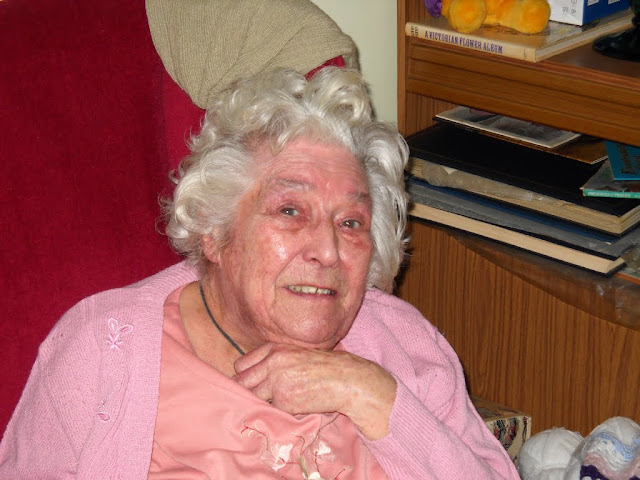
My Mum, Stella (aka to the family as Bet), died recently. I have been trying to think how to commemorate her, but there was so much to remember and so many things I would like to say. She lives on: many of my attitudes and my perspective are derived from her, so it is a reasonable assumption that any comments I make here are likely to be in some way a reflection of her and her influence. She already has a memorial garden here in Młochów, with much I have done here inspiring thoughts of her and with the wish that she was here with me to give advice, comment or simply to enjoy everything.

However, in looking through my photographs, something more direct and personal to her came to mind: her smile (eg from 2010).

From Mum

It is so common in her photographs eg in this childhood picture with brother Jack and sister Margaret - I think it is (Great) Auntie Bun in the background.


At her wedding to Richard:


With their first son, also named Richard - Richard, the father, died around four years after this, so Mum raised their two sons by herself, still smiling:


With (Great) Uncle George, a veteran of both World Wars and a Japanese prisoner of war camp.


With Jan and Will Spayne. Mum's friendship with Jan took us on holidays we might never otherwise have had, walking in the Lake District, Wales and elsewhere.


With Uncle George again and grandson Stephen:


With brother John in 2001:


With granddaughter Misia (Michelle)in 2005:


With the waiter in her favourite Indian restaurant in 2006:


With Babcia Basia (her sister-in-law?) in 2006:


As she became increasingly ill and she could feel her time ebbing away, the smile became more difficult, but it could still be there at least as the glimmer visible in this picture with Misia again in July this year.


One of my last memories of her was in the nursing home where she was staying. She was still being prepared for our visit when we arrived, so we waited outside her room. All we could hear was peels of laughter from the support staff behind the closed door: that was my Mum, making people laugh!

Friday, 14 October 2011

Teacher's Day

For a household with a teacher, schoolgirl and her chauffeur, Teacher's Day is a special day. As Poland.pl describes it (in my English):

Teachers’ Day, officially called National Education Day, is celebrated on October 14 in Poland. The schools organise formal assemblies to honour the teachers.
 
National Education Day was introduced 28 years ago. It is the anniversary of the creation of the Commission of National Education in 1773 by King Stanisław August Poniatowski.

Teachers are given awards by their Directors and students give them flowers and gifts.

Today is special because, despite the above, school children don't go to school, which means that I didn't have the twice daily shuttle. Friday just happens to be the day in the week when everyone leaves late, though, so I didn't get an extra lie-in. That there isn't any education on National Education Day is the most important thing for the kids, but in some mysterious communal way, they did give flowers yesterday. Orchids seem to be very much in fashion at the moment.

I still had an important role to play, however. I produced a plateful of fancily arranged delicacies for the teaching staff's social networking get-together. 'Important', 'fancily' and 'delicacies' rather over egg the value of boiled eggs with garlic sauce wrapped in smoked salmon and ham (plus lettuce and tomato decoration), but at least I did do something to thank our award winning, family teaching member and her colleagues.