Monday, 23 August 2010

Christmas Lights in August

We went to my sister-in-law, Ilona's flat on Saturday for her Name Day celebration. She lives on one of the Warsaw tower block estates in Gocławek (Gots-wa-vek) on the east bank of the Vistula. Standing on the balcony in the dark, I was rather taken by the focused concentrations of lights from the flats and streets against the ambient dark and light contrasts of sky, shadows and buildings.

The photos do not do it justice - my little snapshot camera does not have an effective night setting, but you can get a rough idea from them. A view to the left:
From 2010 08

And to the right:


The overall charm of the peace and calm, leaning on the balcony on a quiet Warsaw Saturday evening, was something worth simply standing there and absorbing. The sound of distant explosions enhancing the sense of relaxation. Then Babcia (Grandma - my mother-in-law) came out and said "shooting" and started to get worried. It was just a firework display, though, out of sight.

Saturday, 21 August 2010

It's August - It's Autumn

What do I know? From city life in London, August was high summer. A couple of years in the Polish countryside and I am beginning to have my doubts. Last year the early days of the month had beautiful misty mornings - archetypal autumnal weather, but, I thought, it was a very wet year so this was just an oddity.

By the middle of August this year, leaves on the trees were starting to change colour and shed. Perhaps this was just young trees in an unsheltered position.
From 2010 08


The grassland is going brown, but that is quite normal in a hot dry summer, although this one was wet and hot.


The trees in the background all seem to be green, but when we went down Chestnut Avenue (Aleja Kasztanowa) there is quite significant browning of the trees when looked at from the road. Driving into Warsaw later, this was even more evident in a number of places along the road.

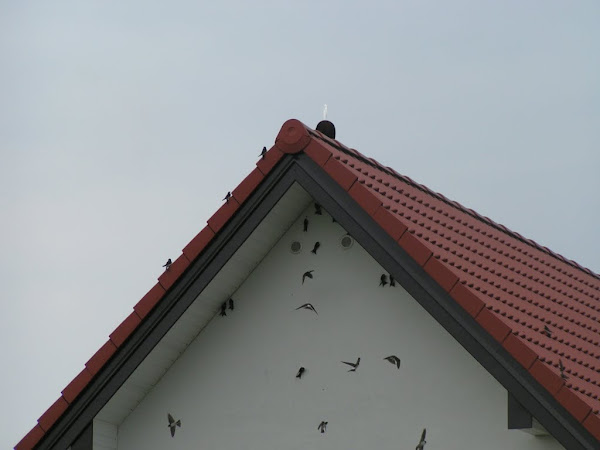
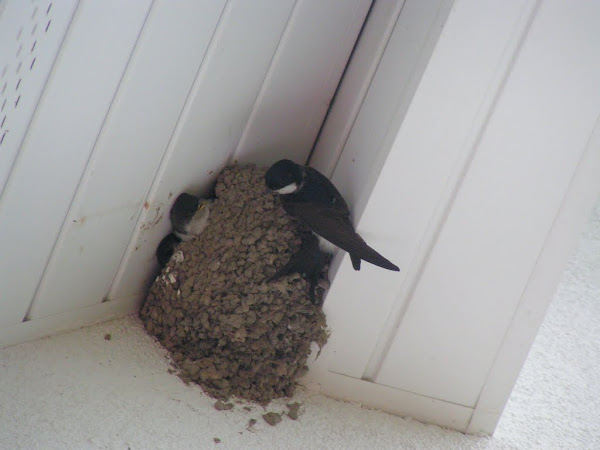
Mind you, house martins have returned, although in limited numbers and with different behaviour patterns. Perhaps they are from further north and stopping here for a rest.

Thursday, 19 August 2010

Polish Tourist Sites Made Easy

In Dębki, I found a wonderful English language tourist guide that can make touring around the Polish countryside a much simpler tourist experience. Its actually an atlas, with tourist sites highlighted and described. It is called Polish Highways and Byways.

From 2010 08

The format (A4 size) is a single left hand page local area map, followed by a right hand page (sometimes more) of information that includes standard historic buildings, but with wider interesting titbits about, and pictures of, key places. Whether you are staying/living somewhere or touring around, it provides a very easy way to see where you can go or stop and have a look.

The cost in the Dębki discount book marquee (one of three there) was 20zl, so have a look in your local cheap book shops. It is still advertised by Empik on the internet at 39 zl (and on a US site at 30 dollars). Polish, German and Russian versions are also available.

As an example local to me, take Raszyn, which lies next to Warsaw on the Krakow Road, inseparable from the Warsaw urban sprawl apart from road signs. I now know it has a baroque and classicist parish church (1654, rebuilt in 1790) and a classicist former inn and stables (18th Century). I also found that it is the largest village in Poland, which was a surprise; that it was the site of a battle in 1809, and that Raszyn Ponds is a nature reserve nearby. To be honest, none of this would get me excited enough to stop and visit, especially as Raszyn Ponds are clearly visible from the main road, as are the lack of easy parking places next to it. The 1809 battle might well have got me looking on the internet if I hadn't heard of it before. So all in all, even this apparently non-visiting place is given a bit more colour. Wikipedia English adds a bit more (and the Polish a little more than that).

However, none of these, and maybe no English language site, tells you that part of the Polish defensive redoubt is still there with a small commemorative plaque. It's a small patch of green between buildings on the side of the road leaving Warsaw by the traffic light junction with ul. Sportowa (Sport Street). Although not a magnificent site on its own, It might be interesting for people interested in major Polish battles. I only found it walking down Krakowska from the tram/bus terminal at Okęcie, along the bus route to Młochów. It was a hot day and a cold beer in a nice pub would have gone down well. Silly me, although I did eventually come across an acceptable (because of the barmaid), but empty combined pizza restaurant and sports TV pub. Actually, my advice to anyone thinking of doing the same thing is to find the Redoubt, then go to one of the nearby shops, buy a beer from the fridge and go and sit on the mound and drink it there.

Tuesday, 17 August 2010

The Polish Seaside

I had my third trip to the Polish seaside this year. My very first had me lauding the cleanliness of the water and beaches, much to the ridicule of Basia, my wife, who knew from Polish television that it was dirty and polluted. This year, international reality had had its effect, with the purity of Polish water being unmistakeable when compared to Italian filth on the Adriatic coast just north of Ravenna a few weeks earlier. It was her turn this year to let me know how clean it was in Poland. I particularly like seeing fish swimming just near the beach.
From 2010 08 Debki


The brown water of a river flowing into the sea was colouring, not dirt.


Access to the beach from the town was through a stretch of woodland.


The beach was wide and made up of clean, fine white sand.


Misia, our daughter, loved the waves. The flat Italian sea had been boring.


There were enough people to make the sand closest to the sea busy, rather than jammed, whilst closer to the wood and away from the main town access paths, there was plenty of empty space.


The bar sold plenty of drinks and snacks, although surprisingly little food. People walked the few minutes back to town or took sandwiches. Beer here and in town was 6zl a half litre. The bar also hosted the town's once a week club music event.


There was one beach entertainment for youngsters in addition to the sea and sand: 10zl for 10 minutes.


Canoeing for others.


The weather was wonderfully cool compared to the heat of Warsaw. There was quite a bit of cloud, but virtually no rain over the week.


The town of Dębki seems almost completely dedicated to its tourists, with little sign of general residence. Accommodation ranged from houses to rent, through bed and breakfast to space for tents. We had a chalet with communal toilets and wash facilities. I was the only one pleased that there wasn't a TV.


The visitors to Dębki largely seem to be families with young children. Although it was full of people, the shops were largely closed by 8.00 in the evening, with the bars/restaurants seeming to fade out by 10:00pm. Musical excitement was provided by a bar that had a one-man, keyboard band: something that I hate at New Year Celebrations, but which seemed completely natural here. Oh, and thinking of bars, I tried a local beer called Viva Hel, which turned out to be a nice Polish unpasteurised wheat-beer (weissbier) at the normal 6zl beer price. Unfortunately, the town seemed to have sold out a couple of days later when I went for a second (and third) bottle as a last evening, farewell drink.

Monday, 16 August 2010

Polish-Soviet War Commemoration

Polish victory in the Polish-Soviet War in 1920 was commemorated yesterday. This year it fell on the same day as a religious festival public holiday, so the shops were closed, but it is normally just part of the State calender of commemorative days. Even so, it is formally Polish Army Day rather than specific celebration of the victory. In a calender which has failed uprisings and an unimplemented constitution, I can't help think that a Polish success public holiday could useful replace a Polish failure.

It has often been said that you cannot understand a country unless you know it's history. My own take on this, which I haven't heard, but assume is a widespread view, is that you cannot understand the people of a country unless you know their perspective of their history. This is very true of Poland, where the people's perspective is fundamental in defining their country, society and their position in the world. The emotional weight that people I know give to long-past events are, from my London point of view, strangely disproportionate to their real current relevance. That people's knowledge of the events is often extremely limited and regularly distorted, but yet solid and unquestionable simply adds to the barriers of understanding. I have been harangued for over an hour twice for questioning the orthodox view of centuries old events, which I take to be the price a foreigner has to pay for being unable to mould a conversation to deal with the sympathies of people around me.

The Polish-Soviet war is of major emotional importance. See Jeziorki blog and polishmeknob blog for Polish perspectives. Whether the victory at the Battle of Warsaw was "One of the crucial battles of world history" is something I cannot even try to judge. That it is a forgotten war, is something I can agree with, but to be fair to my general knowledge - it was too recent an event to be part of my history education - it was just one of many conflicts in the area after World War I. That I was unaware of any details of these is a failure, but I would apply this equally to the Polish Ukrainian War, etc. These are forgotten wars.

However, I do think that the Polish Soviet War is of special importance in analysing the overall flow of 20th Century history. I can best describe this as an uninformed theory, but it seems to have some sense. Nationalism, imperialism and economic competition are standard themes for historical analysis. The social pressures of emancipation of the labouring classes and increasing democratisation can be added to the mix, but it was the excitement of communist ideology that really brought these to the fore as the dream of a new period of historical development, adding internationalism - the unity of peoples through consent.

It was in Poland at this time that the opposing pressures came to the test and ultimately set the pattern for the future. To many of the Bolsheviks, Poland must have seemed an inevitable convert. Piłsudski, the Polish leader, and many of his supporters were known to be communist. The Bolshevik revolutionaries included Polish enthusiasts. However, when it came to the test, it was nationalism that won with Piłsudski dreaming of a new Polish lead Commonwealth, which some of its subsidiary peoples (eg some Ukrainians) considered a proposed new Polish Empire. The Polish ruling elite from the past took its place in governing the country similar to its neighbours to the west.

It is my hypothesis that it was not just the Polish victory in battle that stopped the Soviet advanced, but that it defined the limit to which the new ideologies could defeat the old. It is from these ideological differences that the 'independent' Poland failed to be merged into the USSR and that Poland's Solidarity movement played its part if the end of Communism.

I recognise that my reference to Poland's independence will be considered by many (Poles in particular) to ignore the complete Russian domination that I am routinely told about. I suspect, however, that the completeness of this is part of contemporary Polish nationalist psychology. The routine implication that the many leaders and officials were vaguely sub-human, not-really-Polish people even though by any normal standards they were, seems to be more perspective than objective. (The position of the second nation - Jews - is a separate issue.)

I have no idea whether these trends have any relevance today beyond Poland's view of itself. Current Lithuanian, Belarusian and Ukrainian suspicions of Poland may as much be viewed as counter to my hypothesis as to support it. However, for anyone wanting to get a new perspective on 20th Century history, I would like to think that these principles might help focus on principles too look at. Would a European history exam question in England - "The spread of Communist development was limited by ideological pressure rather than political alliance. Consider this concept in the light of the Polish Soviet War" - be a good hook for gaining interest in Central European history?

Sunday, 15 August 2010

House Martins

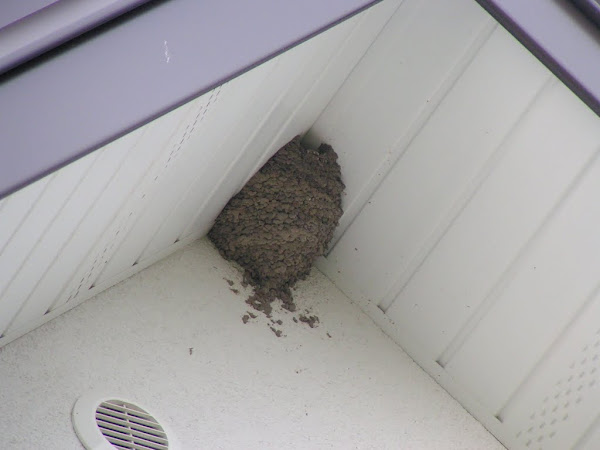
The Martins arrived in May and soon got down to building their nests, picking up mud from the pools of water on the unmade road behind our house.


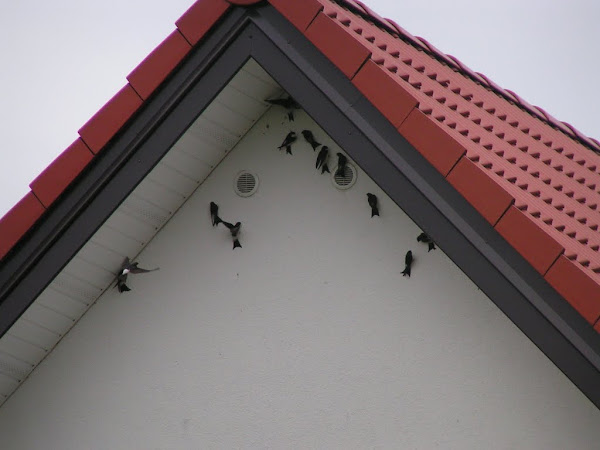
By the end of July, the young birds were practising their flying and landing on walls, ...


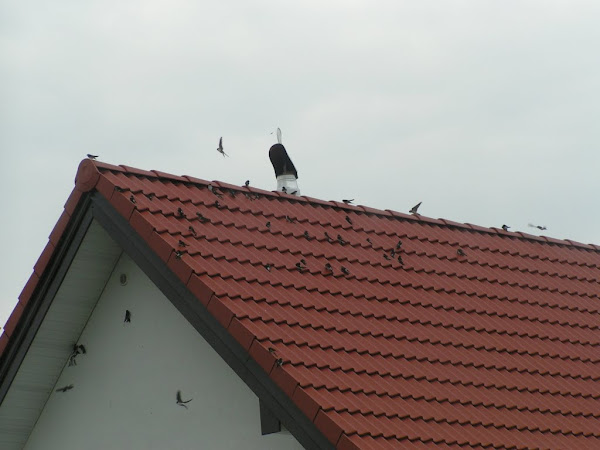
... taking time to rest on roofs.


Most of the young birds had left their nests, which were now a refuge from the mid-day heat and home for the night.


Although one, of our three, still had young being fed.


Returning from a trip away from home, in Mid-August, they had disappeared. Was it just a training flight or had they already started for their winter homes? Some have reappeared today.

Thursday, 24 June 2010

Other sites of interest

I haven't done anything here for ages. I have been looking at other people's work about Poland in English, however, so I pass some of these on to you.

Ask_an_Englishman_czyli_zapytaj_Anglika. Questions to the English about the English language and other aspects of the British.

Polandian: miscellaneous aspects about Poland.

Raf Uzar: ditto

W-wa Jeziorki: ditto. He often has some wonderful photographs as an extra bonus.

There have been comments by 'Steve' recently - for some time on Ask an Englishman - which are mine. From those comments, you will find out more about me and my interest in Poland.