The garden and around from April 'til now:
Monday, 18 July 2011


Wednesday, 6 July 2011
Zamość
Just the name of the town of Zamość immediately raises connotations from Polish historical romance literature. I was very pleased to have a chance to visit when it was suggested that we took the coach to Lvov from there.

It was a damp and dull day and, arriving about 5:00 in the evening, we had little chance to see much beyond going to and round the town square.

There are some individual splendid buildings, such as the Town Hall.

This row of houses beside it were ornately decorated.

The buildings around the town square all have English language plaques explaining who built them. The main single group of builders seems to have been Armenian Merchants. I have seen reference to these in various places in Poland, but I know little about their position in old Poland or their influence on its development: a task for the future.
There was also a plaque on one building commemorating it as the birthplace of Rosa Luxembourg. Although I knew her name and that she was friends with fellow communist Józef Piłsudski, I hadn't realised that she was Polish.

I guess she is (understandably) out-of-fashion in today's anti-communist Poland, which is rather a pity as she is Poland's other most famous daughter for me - along with Marie Curie. Her political position seems particularly interesting within the context of the development of both communist (as it was) and socialist (as it is) thought. More English information is available here. I was told while I was there that she was Stalin's lover, but I suspect that that results from Polish anti-communist propaganda. Her birthplace is the house in the centre of the picture below.

The style of the house is much closer to what I consider to be the standard Polish old town design, with it's limited decoration. (Hence, my pleasure when walking around Lviv. It was also noticeable as soon as crossing the border into the Ukraine that even modern private houses are often built with a much more individual, non-rectangular design than is normal in Poland.)
If I lived in Zamość, I would already have produced a rather fuller history in English than is available on Wikipedia or elsewhere on the internet as far as could find. It may still be a future project, as it provides links into Polish history that are missing from my two local towns. I did, however, find this pdf document on the Jewish perspective of Zamość.
We had tried the internet to book a place to stay over-night,but the few places we found all seemed to be full. We therefore quickly booked in to a small hotel (hotelik) a little out of the centre on the Lublin road side. It is definitely not recommended unless you want to experience an 'ex-communist' hotel. Still we only wanted beds for a few hours (leaving at 5:00am), which were fine and it had warm water. I suspect that there would actually have been plenty of empty accommodation in or near the town square.

If you go back to the picture of the Town Hall, you'll see a small group of people around a blue umbrella. It was 1 July and the first day of the Polish EU Presidency. I've worked through loads of different Presidencies (including British) as a British civil servant dealing with EU issues and it hadn't mattered who had been in charge except in very minor, short term ways. If I hadn't been working on the EU, I probably never would have known about them. I have therefore been incredibly impressed by the way the Polish media has taken it up as a domestic promotional EU campaign.
I have also heard about attempts to use it to promote Poland abroad, which I hope is successful, but I must admit to being sceptical about it reaching much of an audience. Thenews.pl introduced me to the promotional video, although I can't find their page which described it as being metaphorical, related to such things as the economic collapse. Unfortunately this immediately led me to relate the dancers to Nero fiddling while Rome burnt. It also reminded me of the English business lobbyist on CNBC Europe's statement (paraphrased) that "People don't understand that politicians have virtually no influence on what really happens... and the worst decision they made was to join the EU". If you haven't seen the video yet ...
I don't know if we've still got Misia's Barbie animated films, but the animated characters look incredibly familiar and I think that's where the association comes from.
It was a damp and dull day and, arriving about 5:00 in the evening, we had little chance to see much beyond going to and round the town square.
There are some individual splendid buildings, such as the Town Hall.
This row of houses beside it were ornately decorated.
The buildings around the town square all have English language plaques explaining who built them. The main single group of builders seems to have been Armenian Merchants. I have seen reference to these in various places in Poland, but I know little about their position in old Poland or their influence on its development: a task for the future.
There was also a plaque on one building commemorating it as the birthplace of Rosa Luxembourg. Although I knew her name and that she was friends with fellow communist Józef Piłsudski, I hadn't realised that she was Polish.
I guess she is (understandably) out-of-fashion in today's anti-communist Poland, which is rather a pity as she is Poland's other most famous daughter for me - along with Marie Curie. Her political position seems particularly interesting within the context of the development of both communist (as it was) and socialist (as it is) thought. More English information is available here. I was told while I was there that she was Stalin's lover, but I suspect that that results from Polish anti-communist propaganda. Her birthplace is the house in the centre of the picture below.
The style of the house is much closer to what I consider to be the standard Polish old town design, with it's limited decoration. (Hence, my pleasure when walking around Lviv. It was also noticeable as soon as crossing the border into the Ukraine that even modern private houses are often built with a much more individual, non-rectangular design than is normal in Poland.)
If I lived in Zamość, I would already have produced a rather fuller history in English than is available on Wikipedia or elsewhere on the internet as far as could find. It may still be a future project, as it provides links into Polish history that are missing from my two local towns. I did, however, find this pdf document on the Jewish perspective of Zamość.
We had tried the internet to book a place to stay over-night,but the few places we found all seemed to be full. We therefore quickly booked in to a small hotel (hotelik) a little out of the centre on the Lublin road side. It is definitely not recommended unless you want to experience an 'ex-communist' hotel. Still we only wanted beds for a few hours (leaving at 5:00am), which were fine and it had warm water. I suspect that there would actually have been plenty of empty accommodation in or near the town square.
If you go back to the picture of the Town Hall, you'll see a small group of people around a blue umbrella. It was 1 July and the first day of the Polish EU Presidency. I've worked through loads of different Presidencies (including British) as a British civil servant dealing with EU issues and it hadn't mattered who had been in charge except in very minor, short term ways. If I hadn't been working on the EU, I probably never would have known about them. I have therefore been incredibly impressed by the way the Polish media has taken it up as a domestic promotional EU campaign.
I have also heard about attempts to use it to promote Poland abroad, which I hope is successful, but I must admit to being sceptical about it reaching much of an audience. Thenews.pl introduced me to the promotional video, although I can't find their page which described it as being metaphorical, related to such things as the economic collapse. Unfortunately this immediately led me to relate the dancers to Nero fiddling while Rome burnt. It also reminded me of the English business lobbyist on CNBC Europe's statement (paraphrased) that "People don't understand that politicians have virtually no influence on what really happens... and the worst decision they made was to join the EU". If you haven't seen the video yet ...
I don't know if we've still got Misia's Barbie animated films, but the animated characters look incredibly familiar and I think that's where the association comes from.
Well-mannered People Say Please
I heard Ferdek say this in the Polish comedy series The World According to the Kiepskis. His wife told him to get out of the way so that she could put things in the washing machine and he replied that "kulturalna" people say "please". I'd long wondered about this element of Polish good manners, but I don't take it as firm evidence; it's only a comedy programme, after all. In any case, the immediate reaction in the home was that "he speaks just like" me and I have no empirical support for it.

I must have enthused about the series before, as I do consider it the best programme on Polish television: unquestionably the most intelligent general entertainment production. The Google translated (I think) Ukrainian, Wikipedia page says "The theme of the series is the ridicule of such defects as selfishness and laziness, and the lifestyle of Polish families, for whom these inherent traits". I wouldn't go that far, but perhaps it's meant to mean "those Polish families.
The Ukrainian page also seems to suggest that the original director is local ("neighbourhood'), but Okil Khamidov actually comes from Tajikistan, although he now lives in Poland: the only Tajik(istani) I know. Maybe his independent, foreign influence helped shape the unique character of the programme.
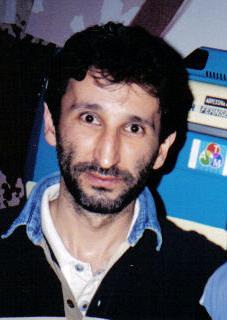
I couldn't even have placed Tajikstan on the map, so Wikipedia, as usual, came to my assistance. It borders with China and Afghanistan.

I must have enthused about the series before, as I do consider it the best programme on Polish television: unquestionably the most intelligent general entertainment production. The Google translated (I think) Ukrainian, Wikipedia page says "The theme of the series is the ridicule of such defects as selfishness and laziness, and the lifestyle of Polish families, for whom these inherent traits". I wouldn't go that far, but perhaps it's meant to mean "those Polish families.
The Ukrainian page also seems to suggest that the original director is local ("neighbourhood'), but Okil Khamidov actually comes from Tajikistan, although he now lives in Poland: the only Tajik(istani) I know. Maybe his independent, foreign influence helped shape the unique character of the programme.
I couldn't even have placed Tajikstan on the map, so Wikipedia, as usual, came to my assistance. It borders with China and Afghanistan.
Monday, 4 July 2011
Lviv: Veni, Vidi, Vicit
It's probably wrong, but it's supposed to mean "I came. I saw, It conquered".

To ask about Lvov in Poland is to be enveiled in nationalistic, patriotic and ethnicity mystique. I therefore went with a completely open mind about what it might actually be like as a place, with, if anything, a fear that it would be rather austere and dull.

I was completely smitten. It felt very much like an old Italian town, with the ornately decorated grandeur of the buildings stretching back into the more decrepit parts of the old area. It was unlike so many old cities where, to the extent they exist in such quality and quantity, these quickly disappear outside the main central area. Much more Paris than Warsaw or Krakow. (I thought I was just being fanciful, but I was relieved to see that Wikipedia describes it as the "Little Paris of Ukraine".

Being on a Polish coach trip, the visit was oriented as part of the pilgrimage to what used to be part of the homeland. First stop was at the Lychakiv Cemetery. I long ago gave up trying to withstand the pushing and shoving to get close enough to hear the tour guide - with the added hazard this time of a couple of old ladies constantly pushing their umbrellas into my head to get through the space I had left outside the mob, but it largely seemed to be about legendary Polish characters (all obscure to me without prior research) plus the Polish war grave area. However, it is a beautiful cemetery and a non-aligned guide would make it worth visiting. The busts representing the dead in this particular part gave a particularly strong impression of real people being there - the picture fails to do it justice. They were Ukrainian and didn't even warrant a moment's pause for the tour.

The Italian feeling extended even to the ordinary cafe bars that were plentifully sprinkled around the city - a feature I very much miss in Poland (and was disappointed not to find in Amsterdam old town). Our first stop after the cemetery was to climb to a popular viewpoint, but on a very wet, cloudy and misty day, I couldn't see the point and we went into an ornate tourist cafe at the bottom. It was beautifully decorated inside, but having got up at 4:30 and by now it being afternoon, the first cup of coffee of the day was well overdue - any place would have done.

There was the inevitable church tourism, but Lviv does have beautiful church interiors. The best, at least in overall impression, was the Armenian Cathedral. (Google translated Polish link, as the English version is not very good.) We only had five minutes, but I was completely struck by the painting of the Burial of Saint Odilon, who established All Saints and All Souls days - researched only now. The spirits of the dead walking beside the bier come out more clearly in the picture than when I was there looking at what appeared to be strange unrecognisable lines. I was told that it was an ancient painting that had been restored in the 20th Century, but the features of the middle character immediately drew my attention by being completely modern. Looking it up now, it is an early 20th Century painting by Jan Henryk Rosen. (Indeed, although the immediate impression is of ancient artwork, it may all date from that period - an amazing achievement.)

Chruches still have their monasteries and places of refuge beside them for people like this wild haired and bearded man, standing at least half naked looking out of the window - every inch an eccentric (mad?) holy man.

Our final destination was the Opera.

The Opera is the perfect size for both intimacy and effect (although one of the chorus seemed to have a set of false teeth several times too big for her). La Traviata is not really a wise choice for me, as a non-opera lover, where my greatest fear is that I start to snore: fortunately, I didn't, even though I had had little sleep in the previous 48 hours. Julia Lysenko was excellent in her lead role and the costumes and scenery were impressive.
All in all, it was worthwhile attending the performance. (I'm not allowed to show pictures like this, but I love it.)

I'd love to have time to stay in Lviv and get properly acquainted with it. I completely recommend it to anyone, especially those of us who consider it a rather exotic destination primarily known from Soviet times. (I don't know how English language friendly it would be, but it can't be that difficult to manage.) However, I don't expect to go back in the near future. Although one hears of the politics of opening up the borders, the aim when going by road seems clearly to discourage visitors. It was described to me as the border guard caring only about themselves and not travellers - closing the border for shift changes and booths shutting while the guards go off for a break. However, this can only happen when people in charge don't want it to be any different. (Both sides will explain why the other side is to blame, but that just shows that political willingness to overcome problems has failed.) I've never seen border guards anywhere - even at Dover in the bad old days - try so hard to match faces to passport photographs - Polish and Ukrainian both. (Photo of the closed border for the Polish morning shift change.)

Actually, I was quite looking forward to a long delay at the border. I thought I would be able to sleep in the coach a bit before driving from Zamość to Warsaw. Unfortunately, a nearby passenger, having finished off his large half of a bottle of Ukrainian vodka, got into extremely load discourse/ prompted monologue on the problems of Poland, etc, lasting from around 9:00 in the evening to past 1:00 in the morning. Although he was asked a couple of times not to speak so loud, this had little effect. He just wouldn't shut-up ... until a very rude Englishman told him to: first in Polish and then, when asked, in English. On his prompting, I finally asked him to "please be silent", on which he finished, muttering little more than "shut up" in English to his mate, which was actually what I first heard him doing in the morning when we were first in the bus (and hence my choice of words). Actually he would have been great fun over a few beers in a pub. I would have like to hear more about his view that life is and the people are much better in Zamość than Warsaw. It's also fun when I find that I know more about Poland than the person talking: in this case about the creation of Polish towns. Who else could have created a town but the great Jan Zamoyski? Hundreds of Polish nobles, as it happens. The completely unknown Jan Rusiecki (or something like that, I haven't rechecked my facts) created local Nadarzyn ... under Chełm Law and all that stuff.
Try flying instead.
To ask about Lvov in Poland is to be enveiled in nationalistic, patriotic and ethnicity mystique. I therefore went with a completely open mind about what it might actually be like as a place, with, if anything, a fear that it would be rather austere and dull.
I was completely smitten. It felt very much like an old Italian town, with the ornately decorated grandeur of the buildings stretching back into the more decrepit parts of the old area. It was unlike so many old cities where, to the extent they exist in such quality and quantity, these quickly disappear outside the main central area. Much more Paris than Warsaw or Krakow. (I thought I was just being fanciful, but I was relieved to see that Wikipedia describes it as the "Little Paris of Ukraine".
Being on a Polish coach trip, the visit was oriented as part of the pilgrimage to what used to be part of the homeland. First stop was at the Lychakiv Cemetery. I long ago gave up trying to withstand the pushing and shoving to get close enough to hear the tour guide - with the added hazard this time of a couple of old ladies constantly pushing their umbrellas into my head to get through the space I had left outside the mob, but it largely seemed to be about legendary Polish characters (all obscure to me without prior research) plus the Polish war grave area. However, it is a beautiful cemetery and a non-aligned guide would make it worth visiting. The busts representing the dead in this particular part gave a particularly strong impression of real people being there - the picture fails to do it justice. They were Ukrainian and didn't even warrant a moment's pause for the tour.
The Italian feeling extended even to the ordinary cafe bars that were plentifully sprinkled around the city - a feature I very much miss in Poland (and was disappointed not to find in Amsterdam old town). Our first stop after the cemetery was to climb to a popular viewpoint, but on a very wet, cloudy and misty day, I couldn't see the point and we went into an ornate tourist cafe at the bottom. It was beautifully decorated inside, but having got up at 4:30 and by now it being afternoon, the first cup of coffee of the day was well overdue - any place would have done.
There was the inevitable church tourism, but Lviv does have beautiful church interiors. The best, at least in overall impression, was the Armenian Cathedral. (Google translated Polish link, as the English version is not very good.) We only had five minutes, but I was completely struck by the painting of the Burial of Saint Odilon, who established All Saints and All Souls days - researched only now. The spirits of the dead walking beside the bier come out more clearly in the picture than when I was there looking at what appeared to be strange unrecognisable lines. I was told that it was an ancient painting that had been restored in the 20th Century, but the features of the middle character immediately drew my attention by being completely modern. Looking it up now, it is an early 20th Century painting by Jan Henryk Rosen. (Indeed, although the immediate impression is of ancient artwork, it may all date from that period - an amazing achievement.)
Chruches still have their monasteries and places of refuge beside them for people like this wild haired and bearded man, standing at least half naked looking out of the window - every inch an eccentric (mad?) holy man.
Our final destination was the Opera.
The Opera is the perfect size for both intimacy and effect (although one of the chorus seemed to have a set of false teeth several times too big for her). La Traviata is not really a wise choice for me, as a non-opera lover, where my greatest fear is that I start to snore: fortunately, I didn't, even though I had had little sleep in the previous 48 hours. Julia Lysenko was excellent in her lead role and the costumes and scenery were impressive.
All in all, it was worthwhile attending the performance. (I'm not allowed to show pictures like this, but I love it.)
I'd love to have time to stay in Lviv and get properly acquainted with it. I completely recommend it to anyone, especially those of us who consider it a rather exotic destination primarily known from Soviet times. (I don't know how English language friendly it would be, but it can't be that difficult to manage.) However, I don't expect to go back in the near future. Although one hears of the politics of opening up the borders, the aim when going by road seems clearly to discourage visitors. It was described to me as the border guard caring only about themselves and not travellers - closing the border for shift changes and booths shutting while the guards go off for a break. However, this can only happen when people in charge don't want it to be any different. (Both sides will explain why the other side is to blame, but that just shows that political willingness to overcome problems has failed.) I've never seen border guards anywhere - even at Dover in the bad old days - try so hard to match faces to passport photographs - Polish and Ukrainian both. (Photo of the closed border for the Polish morning shift change.)
Actually, I was quite looking forward to a long delay at the border. I thought I would be able to sleep in the coach a bit before driving from Zamość to Warsaw. Unfortunately, a nearby passenger, having finished off his large half of a bottle of Ukrainian vodka, got into extremely load discourse/ prompted monologue on the problems of Poland, etc, lasting from around 9:00 in the evening to past 1:00 in the morning. Although he was asked a couple of times not to speak so loud, this had little effect. He just wouldn't shut-up ... until a very rude Englishman told him to: first in Polish and then, when asked, in English. On his prompting, I finally asked him to "please be silent", on which he finished, muttering little more than "shut up" in English to his mate, which was actually what I first heard him doing in the morning when we were first in the bus (and hence my choice of words). Actually he would have been great fun over a few beers in a pub. I would have like to hear more about his view that life is and the people are much better in Zamość than Warsaw. It's also fun when I find that I know more about Poland than the person talking: in this case about the creation of Polish towns. Who else could have created a town but the great Jan Zamoyski? Hundreds of Polish nobles, as it happens. The completely unknown Jan Rusiecki (or something like that, I haven't rechecked my facts) created local Nadarzyn ... under Chełm Law and all that stuff.
Try flying instead.
Thursday, 30 June 2011
Just Clouds
I had begun to think that the garden wasn't going to get any rain. Rain clouds seemed to pass us by, leaving just a sprinkle of drops. The most dramatic looking was this very black series. Approaching from the west:

Heading east:

Complete coverage heading east:

Clearing from the west, with just a few drops falling.

Still, there are things to see in the clouds. A duck?

The man in the moon, fallen down and beckoning?

A dragon, though starting to fade and now maybe a plane:

While this formation, was simply stunning:

None of the pictures have been retouched.
As a final thought, a panoramic cloud picture:

Heading east:
Complete coverage heading east:
Clearing from the west, with just a few drops falling.
Still, there are things to see in the clouds. A duck?
The man in the moon, fallen down and beckoning?
A dragon, though starting to fade and now maybe a plane:
While this formation, was simply stunning:
None of the pictures have been retouched.
As a final thought, a panoramic cloud picture:
Monday, 20 June 2011
National Anthems
I woke up early and it's a dull rainy day, so I've been sitting at the computer going through other blogs, etc after a long break.
Jamie Stoke's comments are often fascinating as well as funny, depicting, as they do, a Poland and Britain I've never come across. His comments on National Anthems led me off to check their words for both countries.
Jamie is just joking, of course, but the idea that Brits regularly start up singing their national anthem is one of his surprises. The words he describes seemed very strange as well. Since I couldn't remember how it starts, I checked the wording. Woodlands Junior School in Kent has a summary. I only knew that there was more than a first verse, with no idea what the rest was.
They also have a full version, which has a rather nice verse wishing the whole world was one happy family:
Not in this land alone,
But be God's mercies known,
From shore to shore!
Lord make the nations see,
That men should brothers be,
And form one family,
The wide world over.
I never knew that existed. It may be a bit too Christian for modern Britain, but the sentiment is pretty good for a nationalistic song. Looking at Wikipedia, however, a problem with the anthem is that no one has ever thought it necessary to decide what the right lyrics are. Wikipedia also has a modern (1836) version by William Hickson that seems to have originated the above verse and which generally is somewhat closer to modern ideas. I wonder if that would have been more popular today if it had been accepted into general usage. Interestingly, the Wikipedia authors do not accept The Official Website of the British Monarchy's definitive claim that "The words of the National Anthem ARE as follows:
God save our gracious Queen!
Long live our noble Queen!
God save the Queen!
Send her victorious,
Happy and glorious,
Long to reign over us,
God save the Queen.
Thy choicest gifts in store
On her be pleased to pour,
Long may she reign.
May she defend our laws,
And ever give us cause,
To sing with heart and voice,
God save the Queen.
In any case, in practice, the basic principle is only to play the music for the first verse, with people standing up and singing, moving their mouths randomly or just standing there looking puzzled. (The latter being a world-wide phenomenon: watching to see whether the players sing or not their various national anthems being one of the highlights of international football matches.)
I feel a bit guilty about never having looked up the words of the Polish Anthem, so thank you Jamie for inspiring me to do so. My only excuse is that I thought of it in similar terms to the wording of the English one - Who cares? It's just historic mumbo-jumbo. Wikipedia gives me an English translation:
Poland has not perished yet
So long as we still live
What foreign force has taken from us
We shall take back with the sword.
March, march, Dąbrowski
From Italy to Poland
Under thy command
Let us now rejoin the nation
Cross the Vistula and Warta
And Poles we shall be
We've been shown by Bonaparte
Ways to victory
March, march...
Like Czarniecki to Poznań
After Swedish occupation,
To rescue our homeland
We shall return by sea
March, march...
Father, in tears
Says to his Basia
Just listen, it seems that our people
Are beating the drums
March, march...
Jamie comments on the Polish version from an English perspective, but, personally, I can't get past my routine bemusement at Napoleon's adoration. However, I do wonder to what extent people reading some other country's national anthem assume that it reflects the feelings of the people. I know that I have had the British National Anthem quoted to me as evidence of strong British allegiance to an outdated monarchy, whilst most Brits I have known feel the words are a bit embarrassing, but consider the national anthem to be too trivial to worry about changing. (A bit like the monarchy itself in many cases.) I don't know what Polish people feel about the words of their anthem and make no judgements about the importance of it's details.
On the other hand, it is interesting, once you know the people of the country a bit, to reflect on the way the anthem conversely reflects their more general attitudes. I was asked the other day to name famous World War II British Generals. I could (and can) only think of Montgomery, after which I was given a list of important Polish Generals and their famous victories. It seems a bit more than coincidental that the Polish national anthem and Polish people both set great store by the blood and guts glory of their military heroes, whilst the British and Brits don't. OK, I do know that Wellington's victory at Waterloo against one of history's most bloody dictators, ensured freedom and peace in Europe, but I don't think that balances the numbers (and I probably shouldn't mention it as Norman Davies' Polish wife is reputed to have asked why London has a railway station celebrating a defeat).
You may have figured out that my wife doesn't read these things, as otherwise I'd have hell to pay for that comment: "freedom and peace!". God, Save the Queen! Babcia just told me the Queen is 86 - I wouldn't have known - so he's doing a pretty good job so far. I had to check: the British National Anthem does not claim that God is male.
Sunday, 19 June 2011
Driving to and from the Chilly West Coast
I remember those South London days when I, and most people, had no concept of long distance driving. Even regularly driving to mid-Norfolk (to see my Mother) was a chore best started between 6.00 and 7.00am to reduce the two hour drive through the western side of London to the (new) M11 motorway. The roads improved slowly (with one section having its 10 year planning process) until I could do the trip in about 3 hours. The Channel to the south wasn't so much a hurdle, as an impenetrable barrier. Insular England!
Now, it's more a question along the lines of (eg last year) "will it be easier to drive to Italy rather than fly, so that we will be able to use the car when we get there?". Yes, it is. (So far) this year, It's been the long haul west.
We find the best way to do this is to stop overnight somewhere in Poland near the border with Germany. This time, it was Pałac Magnat in Garbicz, a few kilometres off the main road, turning off at Boczów.

Staying at these places is often more a matter of general experience than of getting an enjoyable evening and a good night's rest. The Magnat is such a place. It is an 18th Century Mansion House that appears to have been planned to be redeveloped as a high quality hotel and leisure centre catering to the new international market. It never got there, however. The downstairs rooms when you enter have an attractive old palace atmosphere, but going to the upstairs bedrooms, there was a strong sense of decaying infrastructure, as shown below on the grand portico.

It is an end of the road place: the tarmac extends just beyond the hotel gates. The restaurant was closed when we got there because there was a wedding party, so I don't know what the cooking is like. Breakfast (an additional 20 zl cost) was plain, but acceptable, provided one was willing to wait some time for empty dishes to be replenished. Although it wasn't very expensive - 150zl for three (in two rooms rather than the expected one), it costs more than other places near the border. They don't take card payments, which left us pooling all our remaining cash.
However, for early morning risers, there is a pleasant walk by the lake (after inspecting the unfinished swimming pool). I took the eastern route, which I think is primarily used by fishing locals rather than tourists.

Filling up with petrol before the border is an essential routine because of Poland's low fuel cost. There was a reminder just beside the petrol station of the time when the border was a rather grotty, forced stopping place.

Stops on the journey are rather random, according to needs and fancies. I don't much like the German Autohof's for some reason, but Dutch motorway stops were better. There are many similarities between the Dutch and English languages, so I can only guess that this sign in the toilet had something to do with snooping your underwear.

The return journey is nearly always straight home, whether planned or not: there was no time for an overnight stay this time anyway. Once we get to Poland, we already feel at home and the extra (five or six hours) journey time is just an unfortunate technicality. However, an early stop in Poland for food and, in my case, coffee - the best in Europe for some reason, is an important part of the welcome back process. Zajazd Chrobry in Torzym is often our stopping point.

The pictures are old - from the time when we stopped there on the outward journey, but it remains much the same. The transparently fake castle effects make it very conspicuous on the road side and it's car parking facilities for coaches add to its popularity. The food is good and plentiful and service was fine for one coach plus car based customers. The arrival of several coaches can slow things down tremendously, not surprisingly. I remember the hotel rooms as being a bit sparse, but functional, which was fine. From the website, they are cheaper than the Magnat and they take card payments. There is also a money exchange.

I was looking for a bankomat - a perfect Polish word that should be adopted by the English rather than 'ATM' and other sillier descriptions (eg Hole in the Wall!). I knew there was a sign somewhere, but was getting nervous as the motorway, with its toll booths, grew closer. (They take cards, but cash is easier and there are more lanes.) I found it at Trzciel just before the motorway and just when I wanted petrol.

The petrol station is a bit old fashioned, but the petrol is fine. The bankomat, toilets, restaurant - not used by us, and even a night club are in a separate block behind the petrol station, partly hidden by lorries when we arrived.

Getting to and from the motorway at the Warsaw end is made difficult by the enormous amount of road building and improvements in progress, but otherwise the journey out on a Thursday afternoon and Friday, returning on a Monday, was largely free flowing. There was, however, a large jam on Monday evening in the other, outgoing direction beyond and extending onto the motorway . I wonder whether this is a regular Monday feature following lorry movement bans on Sunday - I didn't see any sign of an accident.
15/16 hours is a silly length of time to drive, but I do manage it. However, I must compare my original English feeling that a 400km round journey was a major event, with the Polish willingness to drive several thousand kilometres - for an extended weekend break. It does leave me exhausted, though.
Recommended places to visit in North Holland are Marken,

Volendam,

and even Ijsselhof Holiday Park, where we stayed. There's a nice walk around the dyke.

Amsterdam is basically ... well ... boring.

If you're going from Poland, remember to take a thick jumper, jacket and something waterproof, whilst you marvel at people walking around in light summer clothing. It's cold out there, even on a sunny day, on the chilly west coast.
Now, it's more a question along the lines of (eg last year) "will it be easier to drive to Italy rather than fly, so that we will be able to use the car when we get there?". Yes, it is. (So far) this year, It's been the long haul west.
We find the best way to do this is to stop overnight somewhere in Poland near the border with Germany. This time, it was Pałac Magnat in Garbicz, a few kilometres off the main road, turning off at Boczów.
Staying at these places is often more a matter of general experience than of getting an enjoyable evening and a good night's rest. The Magnat is such a place. It is an 18th Century Mansion House that appears to have been planned to be redeveloped as a high quality hotel and leisure centre catering to the new international market. It never got there, however. The downstairs rooms when you enter have an attractive old palace atmosphere, but going to the upstairs bedrooms, there was a strong sense of decaying infrastructure, as shown below on the grand portico.
It is an end of the road place: the tarmac extends just beyond the hotel gates. The restaurant was closed when we got there because there was a wedding party, so I don't know what the cooking is like. Breakfast (an additional 20 zl cost) was plain, but acceptable, provided one was willing to wait some time for empty dishes to be replenished. Although it wasn't very expensive - 150zl for three (in two rooms rather than the expected one), it costs more than other places near the border. They don't take card payments, which left us pooling all our remaining cash.
However, for early morning risers, there is a pleasant walk by the lake (after inspecting the unfinished swimming pool). I took the eastern route, which I think is primarily used by fishing locals rather than tourists.
Filling up with petrol before the border is an essential routine because of Poland's low fuel cost. There was a reminder just beside the petrol station of the time when the border was a rather grotty, forced stopping place.
Stops on the journey are rather random, according to needs and fancies. I don't much like the German Autohof's for some reason, but Dutch motorway stops were better. There are many similarities between the Dutch and English languages, so I can only guess that this sign in the toilet had something to do with snooping your underwear.
The return journey is nearly always straight home, whether planned or not: there was no time for an overnight stay this time anyway. Once we get to Poland, we already feel at home and the extra (five or six hours) journey time is just an unfortunate technicality. However, an early stop in Poland for food and, in my case, coffee - the best in Europe for some reason, is an important part of the welcome back process. Zajazd Chrobry in Torzym is often our stopping point.
The pictures are old - from the time when we stopped there on the outward journey, but it remains much the same. The transparently fake castle effects make it very conspicuous on the road side and it's car parking facilities for coaches add to its popularity. The food is good and plentiful and service was fine for one coach plus car based customers. The arrival of several coaches can slow things down tremendously, not surprisingly. I remember the hotel rooms as being a bit sparse, but functional, which was fine. From the website, they are cheaper than the Magnat and they take card payments. There is also a money exchange.
I was looking for a bankomat - a perfect Polish word that should be adopted by the English rather than 'ATM' and other sillier descriptions (eg Hole in the Wall!). I knew there was a sign somewhere, but was getting nervous as the motorway, with its toll booths, grew closer. (They take cards, but cash is easier and there are more lanes.) I found it at Trzciel just before the motorway and just when I wanted petrol.
The petrol station is a bit old fashioned, but the petrol is fine. The bankomat, toilets, restaurant - not used by us, and even a night club are in a separate block behind the petrol station, partly hidden by lorries when we arrived.
Getting to and from the motorway at the Warsaw end is made difficult by the enormous amount of road building and improvements in progress, but otherwise the journey out on a Thursday afternoon and Friday, returning on a Monday, was largely free flowing. There was, however, a large jam on Monday evening in the other, outgoing direction beyond and extending onto the motorway . I wonder whether this is a regular Monday feature following lorry movement bans on Sunday - I didn't see any sign of an accident.
15/16 hours is a silly length of time to drive, but I do manage it. However, I must compare my original English feeling that a 400km round journey was a major event, with the Polish willingness to drive several thousand kilometres - for an extended weekend break. It does leave me exhausted, though.
Recommended places to visit in North Holland are Marken,
Volendam,
and even Ijsselhof Holiday Park, where we stayed. There's a nice walk around the dyke.
Amsterdam is basically ... well ... boring.
If you're going from Poland, remember to take a thick jumper, jacket and something waterproof, whilst you marvel at people walking around in light summer clothing. It's cold out there, even on a sunny day, on the chilly west coast.
Subscribe to:
Posts (Atom)